Search
Search
The search "civic art" yielded
56 articles

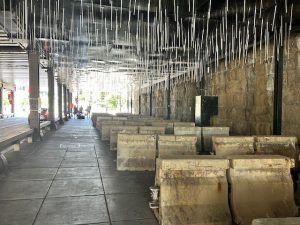
Defensive urbanism: homeless face hard, heavy new hurdles. Jersey style.

It’s been almost two years exactly since I featured various metal rods, rings, and ridges carefully positioned at select locations in various parks and civic plazas in Oakland and San Francisco.  Aside from alliteration, these rods, rings, and ridges shared one ambition: to prevent people from engaging in certain undesirable activities at these public gathering

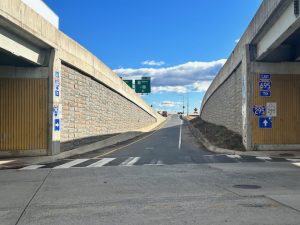
Resistance to Russia reaps rhetorical rewards in Riga.

I usually wait more than a few weeks before I offer a follow-up from an earlier post.  But if I learn something new almost immediately after posting—sometimes as a direct byproduct of the initial article—then I’m more than happy to revisit the subject, offering new insights or corrections as necessary.  More often than not, the

Street sweeping: the cumulative effects of neglect aren’t easily swept away.

In 2024, it’s a rare moment when Washington DC is competently providing a municipal service we should all expect…and yet somehow, in this case, it’s disappointing.  I recognize that this is really my problem: my intent with this article was to say, “Here what a road looks like without street sweeping for an entire year”. 

Burnett Plaza: where human-centered architecture almost gets the shaft.

Poking out over the squat, one-story barbecue joint in the photo above is a relentlessly iterative office building, with not a single variation in its fenestration across all thirty-nine of its upper floors.  Windows look the exact same, row after row after row.  The only exception is the far left and far right of this

Outside the Outer Banks of North Carolina: can OBX energy spread to the Inner Banks?

The letters “OBX” adorn many a back bumper, at least among vehicles in the eastern half of the country, particularly concentrated among the states along the Eastern Seaboard.  (And typically cares at the level of Volvos and Subarus…or pricier.)  It’s safe for me to wager that most people in these eastern states—loosely equating to the

Analog Memes, Part II: a memorable trip down Christmas Card Lane.

As a successor to my post on a bumper sticker bedecked guardrail in Wilmington, I offer a second example of what I must at least partly attribute to meme culture, for which the World Wide Web exerted little to no influence.  This second example of memetic behavior that is anti-digital is probably a bit more

Analog Memes, Part I: a guardrail as the artists’ canvas. 

It’s hard to imagine this in 2022, but there was indeed an era when meme was not a part of common parlance.  Such a time may be hard to conceive for the Generation Zoomers, but most older Millennials and all Xers can recall when they somehow knew and fully understood what the term means, even