Search
Search
The search "blight" yielded
98 articles

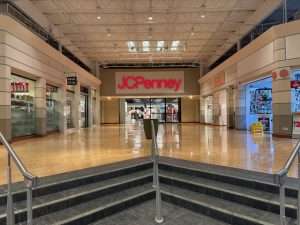
Dying wing in a healthy mall: the Sears phenom all over again?

Potomac Mills, in the heart of the vast Washington DC suburbia that is Northern Virginia, continues to show remarkable resiliency amidst the widespread decline of many—perhaps even most—conventional enclosed shopping malls.  Dead and dying malls are, obviously, a familiar subject on this blog; even from the earliest days in the late 2000s, I explored Lafayette
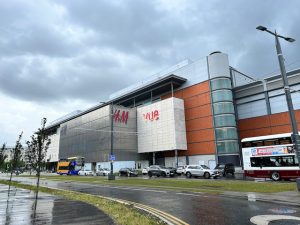
Ocean Terminal in Edinburgh: proof that the dead mall is NOT an American phenomenon?

It’s not a rhetorical question, but it’s one that I would have struggled to answer until recently.  After all, I’ve spent years exploring some of the dreariest corners of underperforming American retail: one or two dead malls in my hometown of Indianapolis (which has resisted mall decay more than most cities, almost entirely due to

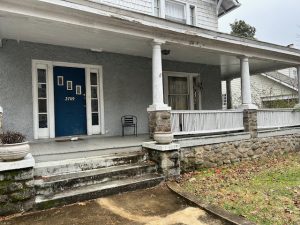
Wisconsin Avenue, a tony street, has a row of trashy homes. What gives?

By and large, what people refer to as Northwest DC—especially the area west of Rock Creek Park—has never faced the problems of disinvestment and depopulation that plagued much of the capital city in the 1970s and 80s.  Even at that point when Washington DC was “the murder capital of America” (as it was for a

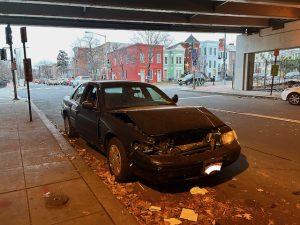
Street sweeping: the cumulative effects of neglect aren’t easily swept away.

In 2024, it’s a rare moment when Washington DC is competently providing a municipal service we should all expect…and yet somehow, in this case, it’s disappointing.  I recognize that this is really my problem: my intent with this article was to say, “Here what a road looks like without street sweeping for an entire year”. 

Hopscotching: supermarkets locate and re-locate. Why can’t gyms?

My latest article is on Urban Indy. It represents a sort of sequel to an article I wrote about 18 months earlier, where I followed a single Kroger supermarket on the south side of Indianapolis as it kept changing locations–four separate places in about twenty years, all new construction. And none of those locations were

Westwood Kmart: the company closes another. And then there were two.

All too frequently, what I expect to be a “small” subject ends up blowing out of proportion.  For example, the last two articles took significantly more time and effort than I expected.  The research bore fruit, and I struggled to constrain my analysis to a mere 1,500 words.  Now I’ve finally found a subject that

Bel Air and phantom storefronts: hiding the vacancy with little gems.

First-time visitors to the town of Bel Air, Maryland aren’t likely to be surprised by what they see—at this point, a well-kept small-town main street isn’t exactly a rarity—but chances are it’ll still charm them.  After all, Bel Air is a distant suburb of Baltimore – Charm City.  It’s the seat of government for Harford

Demo cluster in Alexandria: why tear down respectable homes in a prosperous city?

Alexandria, Virginia, a place I cover frequently in this blog, is a medium sized city of considerable affluence.  Sitting directly across the river from the District of Columbia, it predates the founding of our nation’s capital by a good forty years, meaning it never intended to function as a suburb.  Neither a national capital nor

Dying wing in a healthy mall: the Sears phenom all over again?

Potomac Mills, in the heart of the vast Washington DC suburbia that is Northern Virginia, continues to show remarkable resiliency amidst the widespread decline of many—perhaps even most—conventional enclosed shopping malls.  Dead and