Search
Search
The search "parking" yielded
130 articles

Park and Shop: Cleveland Park’s strip mall oddity faces a new reckoning.

Cleveland Park in Washington DC is, by almost all metrics, a superlatively walkable neighborhood.  Just 2.5 miles northwest of the National Mall and DC’s vast downtown, the neighborhood features finely wrought detached, semi-detached, and multifamily housing, all surrounding a commercial node at the intersection of Connecticut Avenue NW and Ordway Avenue NW.  It is one

Wheeling University: tiny schools trim their budgets, then their lawns.

For the most part, I am loathe to chronicle institutional decline because it captures the livelihoods and aspirations of so many affiliated with the institution (both currently and previously).  It feels not just that I am exploiting the decline but, by drawing attention to it, that I’m exacerbating it.  But the institutions in my crosshairs

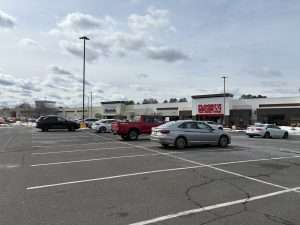
Hybrid strip mall: a retail/wholesale beast in the suburban jungle.

A strip mall is usually the most predictable and omnipresent of low-density suburban commercial land uses.  Every American over the age of ten knows what one looks like: a row of shops, usually low-slung (one-story), a sidewalk linking the storefront entrances, and an abundance of parking out front.  They’ve gotten more aesthetic in recent decades,

Turnstile jumping: a mundane crime faces new hurdles in effective prevention.

It’s impossible to deny a sad truth for anyone who has used transit regularly in the last few years: the shameful act of turnstile jumping has reached epidemic levels in most cities where turnstiles serve as a primary means of fare collection.  And this includes almost any American city with light- or heavy-rail transit.  I

Sedona strip mall: a business incubator can’t count its chicks before they hatch.

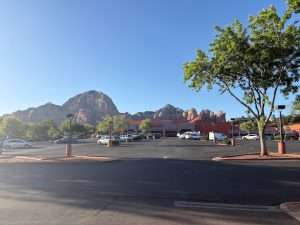
Vacation and resort towns exist—and thrive—usually in response to a market demand to visit, to experience, and (to some extent at least) to linger in a specific location.  Whether a beach, a mountain, a landmark, an insanely agreeable climate, or some other locus of beauty or distinction, the resort town owes its prosperity to its

Underground garage design: if it’s bad, it has the battle scars to show it.

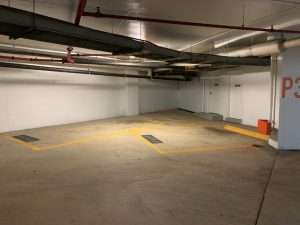
I’d imagine most Americans who possess a drivers license have had at least one sub-par experience in an enclosed parking garage.  Maybe it didn’t amount to an actual accident, but no doubt a dinged bumper or some seriously close call.  In my many years of driving, I’ve had exactly one fender-bender that was my fault,

On-street parking restriction: if it looks funny, it probably doesn’t come from the City (which is humorless).

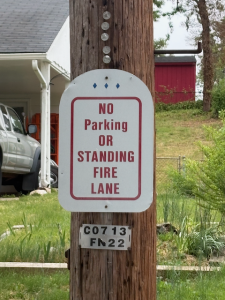
On an otherwise run-of-the-mill middle-class street, in the altogether run-of-the-mill and middle-class Washington DC suburb of Springfield, Virginia, a tiny sign indicates an on-street parking restriction, under certain terms that need a textual explanation.  The notion isn’t strange that a sign can order drivers not park on this side of a quiet, residential, local road;

Marley Station: beloved dead mall shines neon on a new culprit. (MONTAGE)

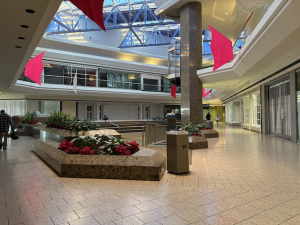
By 2026, it has achieved a cult following, receiving more attention from dead mall aficionados than most of its peers.  In fact, most of the vloggers who make a career out of documenting liminal spaces feel compelled at some point to visit this one.  It’s hard to say why this particular dead mall is so

Bailey’s Crossroads might sound like “cow country”. But the only cows nearby are between two slices of bread.

Country estates.  Buffalo trace.  Woodland grove.  Rolling acres.  Everybody is aware of it, even if they haven’t actively noticed it.  It’s the adoption of rural, almost pastoral language in suburban place-naming strategy, almost as a hat-tip to what the developers bulldozed yesterday to get the strip malls and split-level ranch homes today.  I referenced one

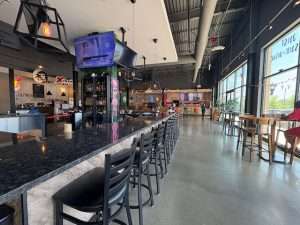
The Spot: a strip mall food hall that might defy the odds.

As we approach the Chinese Year of the Fire Horse, food halls are everywhere.  The largest metropolises, college towns, tourist traps, the repurposed warehouse in that shady part of town, office parks, strip malls.  Originally primarily the domain of large, old, horizontally-oriented buildings in urban districts, they seem adaptable to almost every building shell and