Search
Search
The search "disabled access" yielded
48 articles

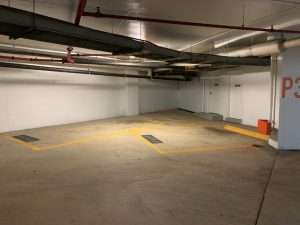
Underground garage design: if it’s bad, it has the battle scars to show it.

I’d imagine most Americans who possess a drivers license have had at least one sub-par experience in an enclosed parking garage.  Maybe it didn’t amount to an actual accident, but no doubt a dinged bumper or some seriously close call.  In my many years of driving, I’ve had exactly one fender-bender that was my fault,
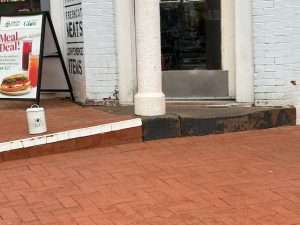
Tread strips: on stairways, fools rush in, when angels fear to intervene.

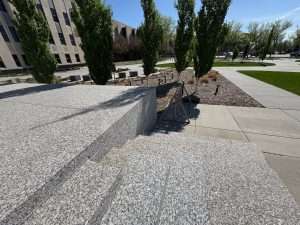
Back in March, I stuck my leg out with an article that I expected to generate a “much ado about nothing” or “marking a mountain out of a molehill” response.  I do have that tendency.  I had stumbled upon an unusual stairway configuration during a visit to the North Dakota State Capitol complex in Bismarck. 

Treacherous stairway: do civic structures sacrifice safety for showiness?

The North Dakota State Capitol is an exception among capitol buildings by not offering the standard references to neoclassicism: no columns, no dome, no spires.  Like three other states, the primary capitol structure in Bismarck is a tower deploying many Art Deco elements emblematic of its date of construction (1932 to 1934), a time period

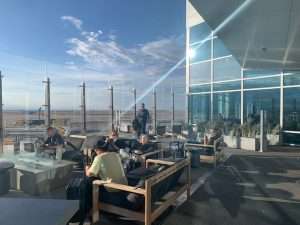
Outdoor deck at an airport: they can be great. So why so uncommon?

I try to avoid articles that are exclusively internationally driven, or even primarily international, as this one is.  But it’s hard not to wonder why, after so many years of flying, the overwhelming majority of airports are such massive, closed-off vaults.  Given that this is the final port of departure before passengers enter a hermetically

Animal accommodations: in the Reflecting Pool, everything is (fiscally) ducky.

“Calm on the surface, paddling furiously underneath.”  Back in 2009, when I wrote my first article on wildlife tunnels in an outer suburb of Boston, I figured this might be the first of many features about animal accommodations—slight modifications to the infrastructure that better integrate the human-built environment with the natural world so that animals

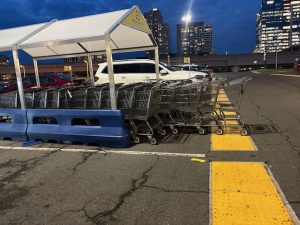
Tactile paving in parking lots: not just at crosswalks, not just for the blind.

Fifteen years ago, when I first started writing articles for this blog, those little yellow or red “doormats” at crosswalks—you know, the ones with the evenly dispersed raised bumps—were still a relative novelty.  They were just beginning to become prevalent at sidewalk ramps leading to crosswalks.  In 2025, I think most Americans have a vague

Therapy dogs: stop crafting loopholes to fair, reasonable laws! (I’m watching you.)

Several months ago, I did something I rarely do and took a hard line on a polarizing topic: allowing dogs (or other pets) into private businesses.  I believed, and continue to believe, that dogs should not be permitted in coffee shops, gyms, hardware stores, grocery stores, or (God forbid) restaurants, unless they are a licensed

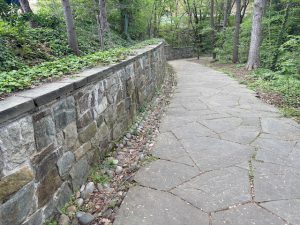
National Cathedral: sublime building, serene grounds. But how about those sidewalk storm drains?

Washington National Cathedral, among the highest-profile religious institutions in the country and certainly in the capital city, has long attracted visitors (pilgrims?) not just for its harrowing Neo-Gothic architecture, or its frequently filmed interior (the site of many presidential funerals), but also for the celebrated green space, which together occupy a hilltop plot measuring 57

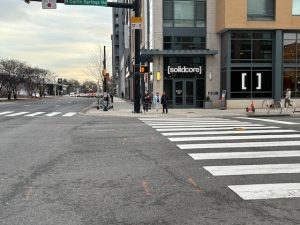
Delayed green lights: a subtle safety measure aiding the vision of zero pedestrian deaths.

As one urban advocacy campaign sunsets, another rises.  I’ve written multiple times—mostly before 2015—about the complete streets initiative: an effort to encourage municipal public works departments to design urban streets for all different tiers of users.  In short, a “complete street” does not just feature vehicular lanes; it offers distinct bike lanes or grade-separated cycle