Search
Search
The search "apartments" yielded
66 articles

Downtown Tempe sprouts a new skyline of its own, but where’s the street energy?

Unlike most cities in the eastern half of the US, the major metros of the West routinely offer suburbs that exceed 100,000 people—sometimes double or triple that amount.  (A few of the suburbs of Los Angeles, Las Vegas, Houston, Dallas, and even Denver are bigger than the core cities of Cincinnati, Buffalo, St. Louis, or
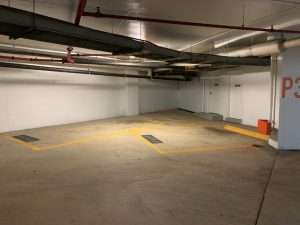
Underground garage design: if it’s bad, it has the battle scars to show it.

I’d imagine most Americans who possess a drivers license have had at least one sub-par experience in an enclosed parking garage.  Maybe it didn’t amount to an actual accident, but no doubt a dinged bumper or some seriously close call.  In my many years of driving, I’ve had exactly one fender-bender that was my fault,

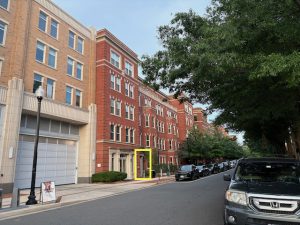
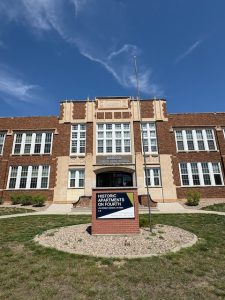
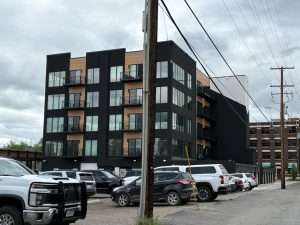
Downtown Billings housing: a humble mid-rise is still a start.

Most American cities, large and small, have experienced such a revitalization of their downtowns since the year 1990 that they’re basically unrecognizable.  Districts formerly presented one carless corridor after another, with panoplies of edifices groaning from varying levels of neglect and decay.  Most of them today have considerably more going on than they did 35

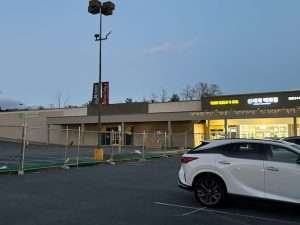
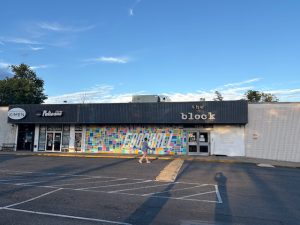
Eastgate Shopping Center: getting ready for The (chopping) Block.

Yes, this article is a filler; I fully confess.  The demands of a November where I was out of the country for one-third, sick for another third, then in full Thanksgiving prep mode for the final third has made it hard for me to reach my quota.  So I’m cramming this one at the end

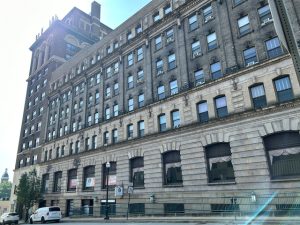
Back entrance: why some big buildings beautify their butts.

Many municipalities in northern Appalachia—which I consider to include Western Pennsylvania, much of Upstate New York, Western Maryland, Western Virginia, Eastern Kentucky, and pretty much all of West Virginia—look bigger than they are.  If one drives past them on a freeway, the density of buildings that form a skyline makes them look quite large, but,

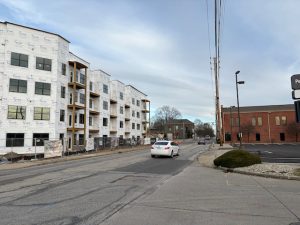
Baltimore Avenue in College Park, MD: from strip malls to super-talls.

I don’t have a reason to visit College Park, Maryland all that often, even though it’s only a handful of miles away from my current home and hosts a major academic institution.  But when I do visit, the small city reminds me what an outlier it is: a freestanding municipality encompassing a major flagship university,

Downtown Billings housing: a humble mid-rise is still a start.

Most American cities, large and small, have experienced such a revitalization of their downtowns since the year 1990 that they’re basically unrecognizable.  Districts formerly presented one carless corridor after another, with panoplies of

Back entrance: why some big buildings beautify their butts.

Many municipalities in northern Appalachia—which I consider to include Western Pennsylvania, much of Upstate New York, Western Maryland, Western Virginia, Eastern Kentucky, and pretty much all of West Virginia—look bigger than they are.