Search
Search
The search "signage" yielded
305 articles

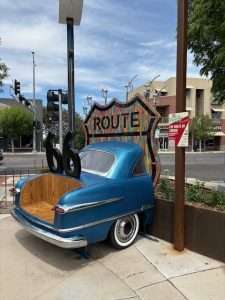
Centennial celebration: Route 66 gets its kicks, through a remix.

Few people truly appreciated it until it was (nearly) gone.  And now it celebrates its centennial.  Across nearly 2,450 miles, Route 66 linked two of the nation’s largest cities, allowing uninterrupted automobile travel across the nation’s sparsely populated western interior for the first time ever.  Prior to April 30, 1926, the date the American Association

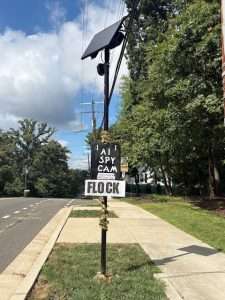
Anti-Flock: the cameras are everywhere, and they’re stronger than ever.

I normally offer a disclaimer whenever I write an article about a timely or currently relevant subject.  Essentially, these disclaimers all offer the same warning: don’t expect this to become a routine.  And, even though my last hot-off-the-press article wasn’t that long ago and generated considerable response, I still won’t get into the habit because,

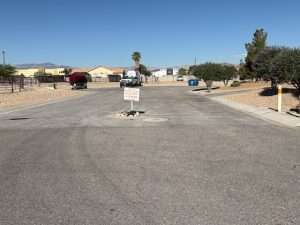
Ethnic enclave: tiny Guadalupe holds its own among Phoenix mega-burbs.

The influence of pop-culture sociology has helped to impart an almost malicious intent onto most ethnic enclaves in the United States.  After all, many academics presume, if a district of profound cultural difference exists in hyper concentration while surrounded by a much larger district reflective of the homogenous cultural majority, the only reasonable explanation for

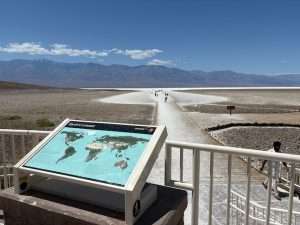
Interpretive sign at Badwater Basin: flinging salt on a geopolitical wound.

Even in some of the most remote and austere nooks of the nation, it’s possible to find overt demonstrations on hot-button global issues.  And why not?  All it takes is one person with a megaphone, a can of spray paint, or whatever the instrument of choice may be to impart an inflammatory message.  Nonetheless, I

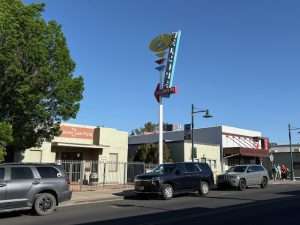
Mid-century signage: seven-decade survival on a sleepy Sonoran street.

I’ve professed my love for mid-century signage multiple times on this blog.  Whether it’s understated modernism, lingering neon, or the overt space-age wonderland of Googie, it all evokes the dawn of the motor era—that point in time, shortly after World War II, when almost every household either owned a vehicle or had easy access to

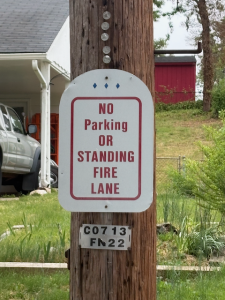
On-street parking restriction: if it looks funny, it probably doesn’t come from the City (which is humorless).

On an otherwise run-of-the-mill middle-class street, in the altogether run-of-the-mill and middle-class Washington DC suburb of Springfield, Virginia, a tiny sign indicates an on-street parking restriction, under certain terms that need a textual explanation.  The notion isn’t strange that a sign can order drivers not park on this side of a quiet, residential, local road;

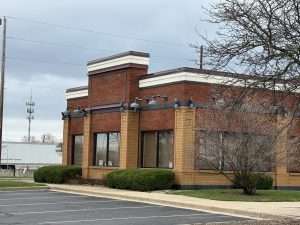
Chain restaurant architecture: years after closure, the branding stamp remains.

Most chain restaurants focus their branding on a few key visual elements: logo, font, colors.  Take Starbucks, for example.  It started in old-school, urban commercial storefronts like Seattle’s Pike Place Market, expanded to other big-city milieus, then went suburban into freestanding structures with parking lots and drive-thru windows.  It adapted the interior model to shopping