Search
Search
The search "suburbs" yielded
203 articles

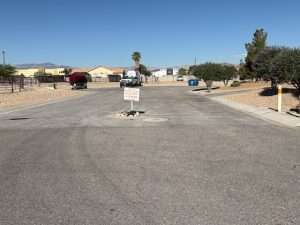
Ethnic enclave: tiny Guadalupe holds its own among Phoenix mega-burbs.

The influence of pop-culture sociology has helped to impart an almost malicious intent onto most ethnic enclaves in the United States.  After all, many academics presume, if a district of profound cultural difference exists in hyper concentration while surrounded by a much larger district reflective of the homogenous cultural majority, the only reasonable explanation for

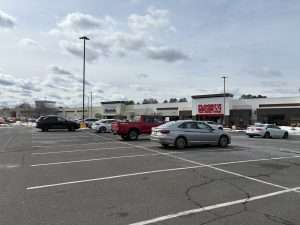
Hybrid strip mall: a retail/wholesale beast in the suburban jungle.

A strip mall is usually the most predictable and omnipresent of low-density suburban commercial land uses.  Every American over the age of ten knows what one looks like: a row of shops, usually low-slung (one-story), a sidewalk linking the storefront entrances, and an abundance of parking out front.  They’ve gotten more aesthetic in recent decades,

Ethnic news rack: it’ll survive as long as there’s a fish to wrap.

If you had asked me five years ago, I would have never guessed that these ugly rusty boxes would prove such fruitful blog material.  But here I am again, after diving in to these news racks twice back in 2022 (and needing a tetanus booster as a result).  Vending machines for news media used to

Sideways subdivision: Sin City homebuilders find new ways to pack ‘em in.

The predictability of a post-1950s subdivision in most of suburban America almost renders it impervious to analysis.  After all, there’s nothing exotic about a middle-class home with 3-4 bedrooms, 2.5 baths, and a two-car garage.  Most Americans encounter such houses on a daily basis, if they don’t already live in one.  And the prevalence of

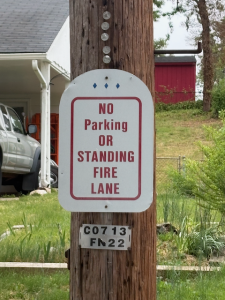
On-street parking restriction: if it looks funny, it probably doesn’t come from the City (which is humorless).

On an otherwise run-of-the-mill middle-class street, in the altogether run-of-the-mill and middle-class Washington DC suburb of Springfield, Virginia, a tiny sign indicates an on-street parking restriction, under certain terms that need a textual explanation.  The notion isn’t strange that a sign can order drivers not park on this side of a quiet, residential, local road;

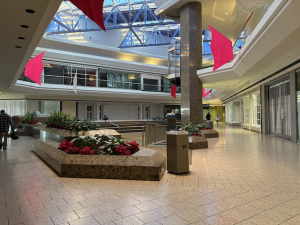
Marley Station: beloved dead mall shines neon on a new culprit. (MONTAGE)

By 2026, it has achieved a cult following, receiving more attention from dead mall aficionados than most of its peers.  In fact, most of the vloggers who make a career out of documenting liminal spaces feel compelled at some point to visit this one.  It’s hard to say why this particular dead mall is so

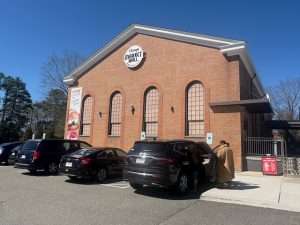
Ukrop’s: an old Richmond family grocer re-enters the market. As a real estate developer.

Just spitting distance from the municipal boundary of the independent city of Richmond, Virginia is a small, inconspicuous shopping center called Triangle Park.  Truth be told, all of the photos in this article depict properties just outside the commercial property called Triangle Park.  However, these photos still sit within the same triangle shaped superblock where

Bailey’s Crossroads might sound like “cow country”. But the only cows nearby are between two slices of bread.

Country estates.  Buffalo trace.  Woodland grove.  Rolling acres.  Everybody is aware of it, even if they haven’t actively noticed it.  It’s the adoption of rural, almost pastoral language in suburban place-naming strategy, almost as a hat-tip to what the developers bulldozed yesterday to get the strip malls and split-level ranch homes today.  I referenced one