Search
Search
The search "logos" yielded
98 articles

Rosslyn Spectrum: Arlington County’s bid for high art gets spurned.

The font, the name “spectrum”, the combination of rainbow against a monochrome backdrop, the inclusion of a prism—it all evokes an aesthetic gestalt that probably seemed pretty fashionable during its 1980s inception (concurrent with the album Glassworks, maybe?), then enjoyed a lingering viability as a signifier of all things highbrow and “arty”, all the way
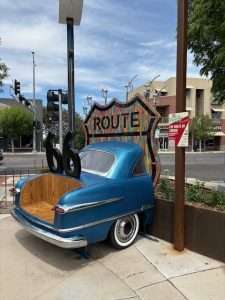
Centennial celebration: Route 66 gets its kicks, through a remix.

Few people truly appreciated it until it was (nearly) gone.  And now it celebrates its centennial.  Across nearly 2,450 miles, Route 66 linked two of the nation’s largest cities, allowing uninterrupted automobile travel across the nation’s sparsely populated western interior for the first time ever.  Prior to April 30, 1926, the date the American Association

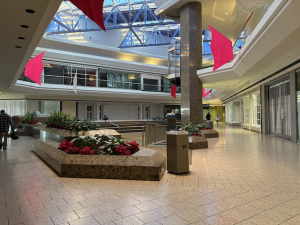
Marley Station: beloved dead mall shines neon on a new culprit. (MONTAGE)

By 2026, it has achieved a cult following, receiving more attention from dead mall aficionados than most of its peers.  In fact, most of the vloggers who make a career out of documenting liminal spaces feel compelled at some point to visit this one.  It’s hard to say why this particular dead mall is so

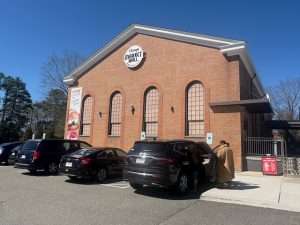
Ukrop’s: an old Richmond family grocer re-enters the market. As a real estate developer.

Just spitting distance from the municipal boundary of the independent city of Richmond, Virginia is a small, inconspicuous shopping center called Triangle Park.  Truth be told, all of the photos in this article depict properties just outside the commercial property called Triangle Park.  However, these photos still sit within the same triangle shaped superblock where

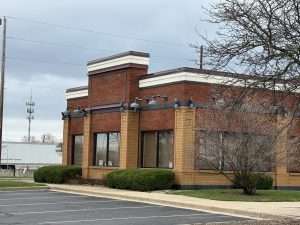
Chain restaurant architecture: years after closure, the branding stamp remains.

Most chain restaurants focus their branding on a few key visual elements: logo, font, colors.  Take Starbucks, for example.  It started in old-school, urban commercial storefronts like Seattle’s Pike Place Market, expanded to other big-city milieus, then went suburban into freestanding structures with parking lots and drive-thru windows.  It adapted the interior model to shopping

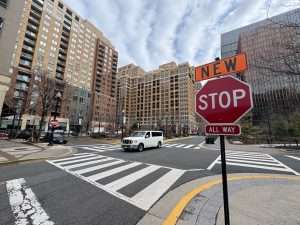
New stop sign: is it engineering?  Planning?  Marketing? 

Whether by foot or by wheel, the average American encounters a certain red octagon frequently enough that 99% of adults will know what I’m talking about with no additional context.   It’s not just that only one commonly occurring icon comes to mind that fits this “red octagon” description—though that’s certainly the case—it the fact

The Spot: a strip mall food hall that might defy the odds.

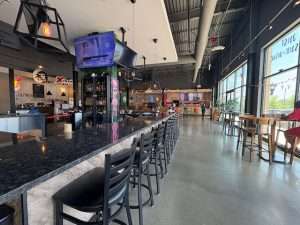
As we approach the Chinese Year of the Fire Horse, food halls are everywhere.  The largest metropolises, college towns, tourist traps, the repurposed warehouse in that shady part of town, office parks, strip malls.  Originally primarily the domain of large, old, horizontally-oriented buildings in urban districts, they seem adaptable to almost every building shell and

Panic buying: when winter gusts blow the food right off the shelves. 

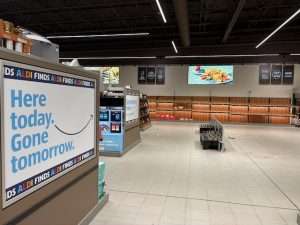
As a general rule I avoid subjects that are extremely timely, that reflect current events as they unfold.  First of all, I prefer topics that have more staying power, which is something that rarely characterizes breaking news.  Secondly, this blog is always only a side hustle, and, when I begin an article, I never know

Drugstore clinics: bringing health care to the spot where we buy $8 milk?

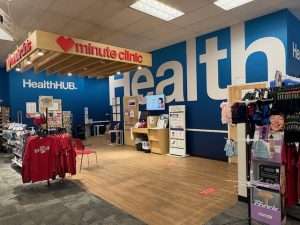
Through this blog, I strive to be a “noticer”.  In many instances, no doubt, I’m realizing shifts or trends that unfolded many years ago, either so slowly that almost everyone failed to notice them (the boiling frog condition), or I’m just slow at catching on.  Hopefully not the latter, and preferably neither, as far as