Search
Search
The search "July 2024" yielded
5 articles

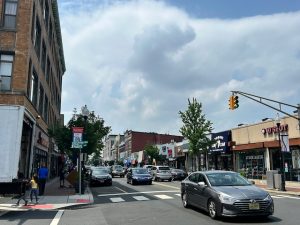
Blue-collar prosperity: a quick survey of Perth Amboy’s thriving downtown.

I’m not exactly making bold a proposition when I assert that, if a community experiences an overall decline in its income levels (and a growth in poverty rate), the economic health of its primary retail nodes is likely to deteriorate concurrently.  Such a statement isn’t exactly going out on a limb.  Any significant change, in
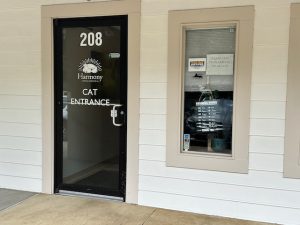
Separate entrances: will cats and dogs make peace before humans ever find a cure-all?

It’s hardly earth-shattering for a storefront to have two separate entrances, if it’s over a certain size.  Sometimes even smaller establishments decide that they want two doorways for customers.  (Building and safety codes often require a distinct fire/service entrance in the back of the establishment, if its over a minimum size.)  Then again, this is

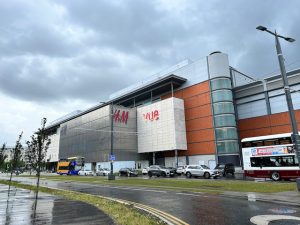
Ocean Terminal in Edinburgh: proof that the dead mall is NOT an American phenomenon?

It’s not a rhetorical question, but it’s one that I would have struggled to answer until recently.  After all, I’ve spent years exploring some of the dreariest corners of underperforming American retail: one or two dead malls in my hometown of Indianapolis (which has resisted mall decay more than most cities, almost entirely due to

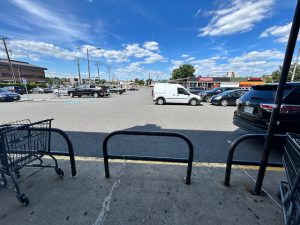
Tavistock, New Jersey’s smallest borough, is 95% greens space. (Greens, not green.)

A few lifetimes ago, when I lived in the northern suburbs of Chicago (the “North Shore”) I would routinely drive along Golf Road, an east-west arterial linking the city of Evanston (where they called it Emerson Street) and the seemingly never-ending concatenation of suburbs to the west.  Continuing westward, Golf Road eventually terminates in Elgin,