Search
Search
The search "streets" yielded
141 articles

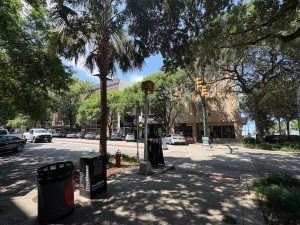
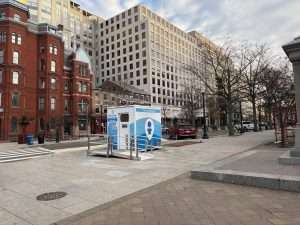
Potty paucity: private providers offer relief to those who need to relieve themselves.

Visitors to the US—particularly those from Europe—have long criticized the Stars and Stripes for the dearth of public restrooms in tourist-rich urban districts: only about 8 per 100,000 people.  This ratio places this US on par with Botswana, but also Netherlands, Georgia, and Poland (so it’s not a uniquely American program, to all those Eurocritics). 
Competitive rest area: fodder fodder everywhere, but not a drop to drink!

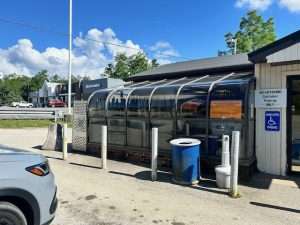
In an era when almost every interstate exit offers the requisite gas/food/lodging, what is the function of publicly financed rest areas?  I ponder this subject not because I have any major beef with their existence.  I still use rest areas fairly often and have featured more than a few in my blog.  Though most operate

Commercial conversion from home to monastery? Really makes you rub the Chin.

As a metro area urbanizes, the old country homes built off of major highways become less appealing as residences and more appealing as commercial entities.  This isn’t surprising; the quiet metamorphosis has taken place for decades.  A subtle commercial conversion.  People don’t want to live directly alongside throngs of fast-moving vehicles if they can help

Dunbar, West Virginia: the least effective pedestrianized downtown ever?

I hate to title a blog article with superlatives, because they’re so often redolent of clickbait.  Everyone knows an example: “the biggest box office flop”, “the most dangerous bridge”, “the ugliest dog”, “the heaviest married couple”.  Guinness Breweries managed to build a spinoff empire out of its initial 1955 Book of Records, which according to

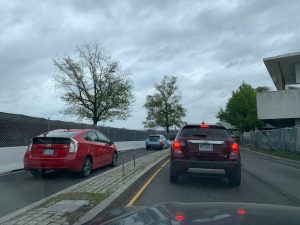
Contraflow: a forced one-way street can promote safety or confusion.  Context is key.

Many, many moons ago, during the breezy period right out of schooling when I lived in Southern Louisiana, I had to evacuate from a hurricane or two.  (“Breezy” takes on a new meaning.)  Though I was indeed a New Orleans resident during the most ill-fated of hurricanes in anyone’s recent memory—Katrina—I coincidentally was out of

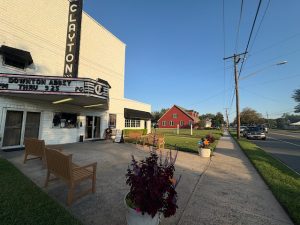
Rural single-screen: how does the Clayton Theatre in Dagsboro, Delaware survive 75 years?

It’s hard to find an old single-screen move theater that’s thriving, even in affluent urban areas.  When it comes to those walkable, revitalizing main street districts—where people collectively demonstrate their affection for old architecture by refurbishing and repurposing old buildings for niche businesses—the vintage movie theaters from the Golden Age of Cinema should ride the

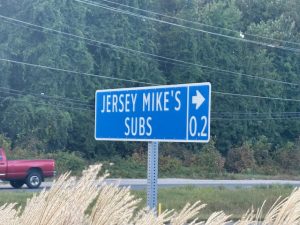
White-on-blue directional signs: they might be everywhere, but are they a gold standard?

Crossing the Occoquan River from Prince William County to southern Fairfax County in Northern Virginia doesn’t yield a lot of surprises.  Regardless of the county, it’s all suburbia, albeit a lot less dense and urbanized than Arlington County or other parts of Fairfax that are closer to Alexandria and, of course, Washington DC.  But, while