Search
Search
The search "revitalization" yielded
228 articles

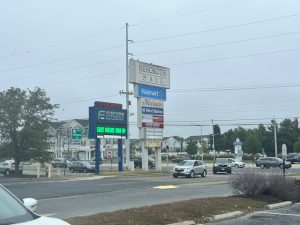
Rehoboth Mall: the dead mall deconstructed (architecturally and rhetorically).

Malls across the country, large and small, urban and suburban, enclosed and open-air, are dying.  They’re getting sucked into a vortex of shifting consumption patterns that rejects what we might call peripatetic shopping.  The image of an attractive woman clothing multiple large paper bags is increasingly passé.  People shop while seated at their home computers,
Single-screen theater is a tough business. Even posh neighborhoods would agree!

Seen a flick at a single-screen theater lately?  Ever seen a movie at a single-screen theater at all?  Odds are strong—for any American over the age of 35 who grew up an urban cluster (basically any community over 5,000 people, per the Census’s revised definition—the answer is  probably “no”.  Some very remote small towns have

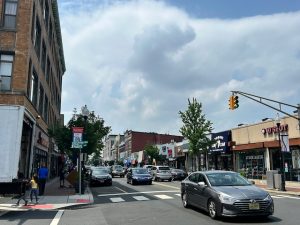
Blue-collar prosperity: a quick survey of Perth Amboy’s thriving downtown.

I’m not exactly making bold a proposition when I assert that, if a community experiences an overall decline in its income levels (and a growth in poverty rate), the economic health of its primary retail nodes is likely to deteriorate concurrently.  Such a statement isn’t exactly going out on a limb.  Any significant change, in

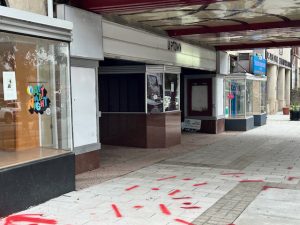
Ocean Terminal in Edinburgh: proof that the dead mall is NOT an American phenomenon?

It’s not a rhetorical question, but it’s one that I would have struggled to answer until recently.  After all, I’ve spent years exploring some of the dreariest corners of underperforming American retail: one or two dead malls in my hometown of Indianapolis (which has resisted mall decay more than most cities, almost entirely due to

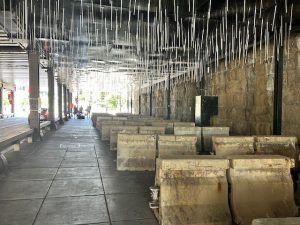
Defensive urbanism: homeless face hard, heavy new hurdles. Jersey style.

It’s been almost two years exactly since I featured various metal rods, rings, and ridges carefully positioned at select locations in various parks and civic plazas in Oakland and San Francisco.  Aside from alliteration, these rods, rings, and ridges shared one ambition: to prevent people from engaging in certain undesirable activities at these public gathering

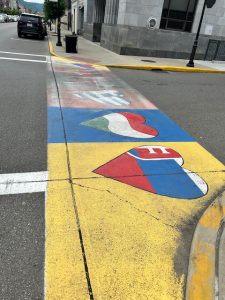
Flag Day celebration (and quiz)! How one PA steel town bravely recognizes its past.

It’s Flag Day!  And it’s kind of remarkable how, given my blog’s fixation with flags over the years (including some very creative flag reimagining), I’ve never really covered this 75-year-old holiday, commemorating the 247th anniversary of a distinct American flag.  Yes, it was June 14th in 1777 that the Second Continental Congress adopted an official

Glenwood Springs: so much to do that they could only fit some of it under a bridge. (MONTAGE)

Glenwood Springs, Colorado is a fun town.  That’s its brand.  It aspires to be one of America’s most recreationally-minded small municipalities—really more of a tiny city—and it routinely makes the top 10 lists among various outdoor-centric periodicals, as I covered once before.  Sometimes it reaches a bit further, placing on lists of all-around best and

Pizzeria conversion: with one city’s Italian loss is another’s gain.

It’s a busy time of year and I need to meet my monthly blogging goals, so I’m going to cheat a little bit and piggyback on my previous article.  To be frank, it’s a double-cheat, since I usually try to avoid featuring the same state for two blog articles in a row.  But here I