Search
Search
The search "traffic flow" yielded
98 articles

The turn radius—what does it limit more: the car or its driver?

The vehicular turn radius might seem like a simple feature, but its impact on the urban environment is akin to a pebble plunked into a pond.  And that simile carries extra weight because the pebble-in-a-pond’s impact is a series of concentric rings outward—basically another incarnation of the radii of varying sizes.  Traffic engineers have long
Mid-block switch: why would a street change traffic flow through signs and stripes?

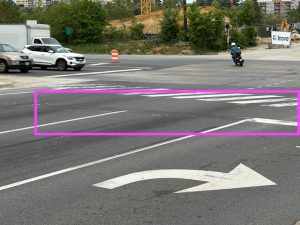
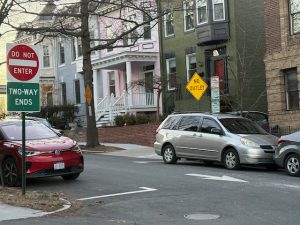
About eighteen months ago, when I first noticed Fillmore Street in Arlington County, Virginia, I thought it was an odd but clever striping for diverting traffic away from a busy and confusing intersection.  I couldn’t recall any other example where a road switched from two-way to one-way in the middle of a block, or, what

Stub street seminar: why developers keep building tiny, pointless dead-end roads.

The term “stub street” rarely comes up in conversation, yet enough people have a mental image of what it entails that it would be almost patronizing to explain what it means.  However, those cognitive apparitions vary so greatly that I’m going to go right ahead and patronize.  After all, a consistent definition of a stub

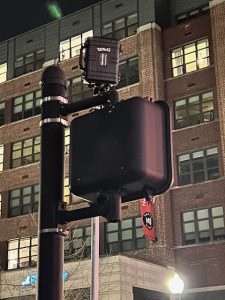
Delayed green lights: a subtle safety measure aiding the vision of zero pedestrian deaths.

As one urban advocacy campaign sunsets, another rises.  I’ve written multiple times—mostly before 2015—about the complete streets initiative: an effort to encourage municipal public works departments to design urban streets for all different tiers of users.  In short, a “complete street” does not just feature vehicular lanes; it offers distinct bike lanes or grade-separated cycle

Confusing public infrastructure: is it really safer if it alienates visitors?

I strive to research my critiques of confusing public infrastructure as much as possible, so that these articles don’t assume the tone and tenor of a rant.  Everyone at some point has encountered a situation in an unfamiliar city (whether big or small) that confuses and probably irritates him or her.  It’s understandable to sound

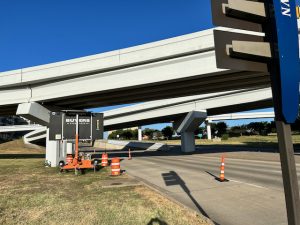
Can opener of Durham: this one is just a bridge too far (for moving trucks at least).

Durham, North Carolina: as is often the case, a railway bisects the downtown.  It became a viral video feature long before it became a commodity.  And, somewhere along the way, it achieved something akin to meme status—though I’ll admit that I am stretching the definition of meme pretty generously to get there.  Oh well.  I’ve

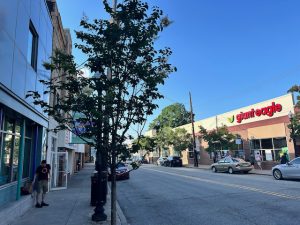
Blank wall bravado: a trendy neighborhood’s supermarket is more and less than meets the eye.

This article represents an interesting first.  Frankly, I’m surprised it’s taken this long—15 years of blogging!—for someone to approach me about this while I was out snapping pics for my blog.  Given that I have over 20,000 photos consisting primarily of mailboxes, parking meters, cracked curbs, lonely utility poles, labelscars, and miscellany that would only

A downtown without clear pedestrian advocacy: the Fort Worth example.

Many years ago—before I even had conceived of this blog—I was an intern for a university semester at WalkBoston, which was (and remains) the signature pedestrian advocacy organization for Bean Town.  Founded in 1990, it was the first of its kind in the country.  Since then (and since my internship), WalkBoston’s scope and ambitions have

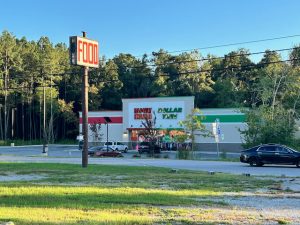
Dueling dollar stores in a small town: why would identical companies share a party wall?

During the season of giving, it’s not likely that most people’s first notion of a repository for seasonal gifts is a dollar store.  Christmas, Hanukkah, Kwanzaa, Festivus, you name it. I suppose I’m making an elitist generalization here: after all, many people lack the wherewithal for purchase gifts anywhere other than a dollar store.  Furthermore,