Search
Search
The search "signage" yielded
305 articles

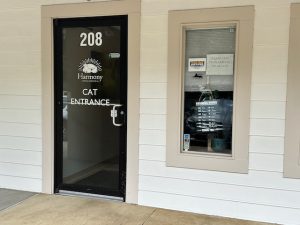
Separate entrances: will cats and dogs make peace before humans ever find a cure-all?

It’s hardly earth-shattering for a storefront to have two separate entrances, if it’s over a certain size.  Sometimes even smaller establishments decide that they want two doorways for customers.  (Building and safety codes often require a distinct fire/service entrance in the back of the establishment, if its over a minimum size.)  Then again, this is
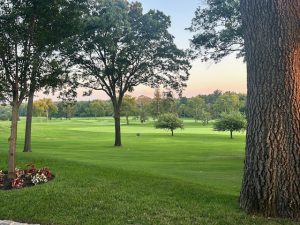
Tavistock, New Jersey’s smallest borough, is 95% greens space. (Greens, not green.)

A few lifetimes ago, when I lived in the northern suburbs of Chicago (the “North Shore”) I would routinely drive along Golf Road, an east-west arterial linking the city of Evanston (where they called it Emerson Street) and the seemingly never-ending concatenation of suburbs to the west.  Continuing westward, Golf Road eventually terminates in Elgin,

Sign regulations: what it looks like if your town generally lacks good ones.

“Signage” has long been the most prominently used keyword here at this blog.  Within its respective jurisdiction, a municipal planning community fixates more than the average person—more even than me—on signs: their placement, size, color, luminosity, content, what can exist.  The American Planning Association (APA) routinely devotes webinars like this on the subject, and, at

Rax Roast Beef: a peek inside one of the last locations of a once-mighty 80s chain.

“Fast food with style.”  That’s the motto that I, coming of age in the late 80s and early 90s, associate the most with Rax Roast Beef.  But let’s face it: when this formerly thriving restaurant began floundering, the slogans shifted with the seasons.  Thirty years later, it’s hard to say which marketing campaign is the

Wisconsin Avenue, a tony street, has a row of trashy homes. What gives?

By and large, what people refer to as Northwest DC—especially the area west of Rock Creek Park—has never faced the problems of disinvestment and depopulation that plagued much of the capital city in the 1970s and 80s.  Even at that point when Washington DC was “the murder capital of America” (as it was for a

Bigger Washingtons (Part II): the remaining cities that honor George.

Continuing from where Part I left off, this article will explore the remaining 15 municipalities named Washington in the United States, the District of Columbia excluded.  Ranking them from least to most populous, the previous article covered the smallest eight; this will conclude with the seven bigger Washingtons, up to the most populous of all.